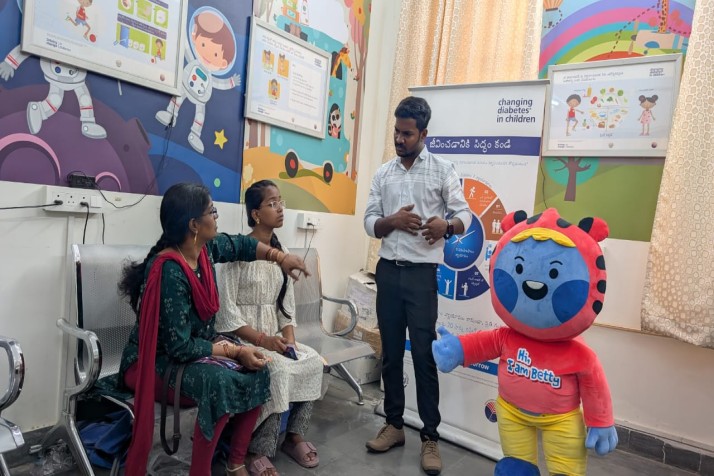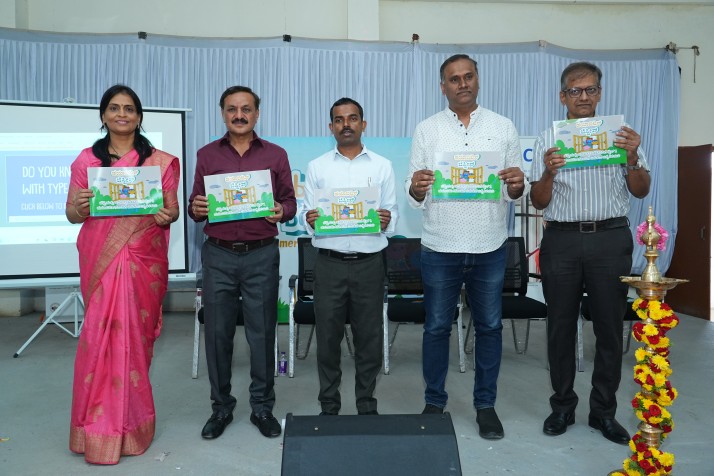
The 14 state-of-the-art Centers of Excellence for T1D serve as exemplar hubs for standardized and comprehensive T1D management of children and youth living with diabetes. As a result of this initiative, 7 state governments have committed funding and infrastructure to the cause of type 1 under our sustainable CoE advocacy and have helped deliver significant clinical outcomes, support quality diabetes care to more than 8,000 T1D children and counting..
The primary objective of this initiative is to improve government healthcare infrastructure,
capacity building, enhance care, raise T1D awareness, provide age-appropriate education, establish a patient registry, implement follow-up mechanisms, and create a referral system to monitor patient outcomes, ensure continuity of care, and track the long-term effectiveness of interventions.
This model is a major step forward in the national health agenda, focusing on the inclusion of T1D under the National Programme for Prevention and Control of Non-Communicable Diseases (NP-NCD) and a sustainable funding mechanism and budgetary allocations to ensure sustained treatment via easy access and free supply of insulin, glucometer strips, lancets, glucose monitoring devices, and reliable insulin storage facilities, along with diabetes education. Through the CoE model, we are reimagining and reshaping approaches to T1D management in India, ensuring better patient experiences and outcomes. This long-term self-sustainable model through state partnership is to secure larger advocacy across India for improved policies for the cause of T1D using data analytics and digital health.
A state-government partnership with a PPP approach for T1D access to care in close participation with Govt. resources and NN expertise on T1D management.
Integrated care model focused on four pillars:
.png)
*The map above is for illustrative purposes and is not drawn to scale
Severity: Warning
Message: Undefined property: stdClass::$display_image
Filename: pages/page.php
Line Number: 2
Backtrace:
File: /home/etv7xni478mp/public_html/frontend/views/pages/page.php
Line: 2
Function: _error_handler
File: /home/etv7xni478mp/public_html/frontend/views/templates/includes/body_inner_2.php
Line: 64
Function: view
File: /home/etv7xni478mp/public_html/frontend/views/templates/inner_page_2.php
Line: 6
Function: view
File: /home/etv7xni478mp/public_html/frontend/controllers/Index.php
Line: 19
Function: view
File: /home/etv7xni478mp/public_html/index.php
Line: 315
Function: require_once
The 14 state-of-the-art Centers of Excellence for T1D serve as exemplar hubs for standardized and comprehensive T1D management of children and youth living with diabetes. As a result of this initiative, 7 state governments have committed funding and infrastructure to the cause of type 1 under our sustainable CoE advocacy and have helped deliver significant clinical outcomes, support quality diabetes care to more than 8,000 T1D children and counting..
The primary objective of this initiative is to improve government healthcare infrastructure,
capacity building, enhance care, raise T1D awareness, provide age-appropriate education, establish a patient registry, implement follow-up mechanisms, and create a referral system to monitor patient outcomes, ensure continuity of care, and track the long-term effectiveness of interventions.
This model is a major step forward in the national health agenda, focusing on the inclusion of T1D under the National Programme for Prevention and Control of Non-Communicable Diseases (NP-NCD) and a sustainable funding mechanism and budgetary allocations to ensure sustained treatment via easy access and free supply of insulin, glucometer strips, lancets, glucose monitoring devices, and reliable insulin storage facilities, along with diabetes education. Through the CoE model, we are reimagining and reshaping approaches to T1D management in India, ensuring better patient experiences and outcomes. This long-term self-sustainable model through state partnership is to secure larger advocacy across India for improved policies for the cause of T1D using data analytics and digital health.
A state-government partnership with a PPP approach for T1D access to care in close participation with Govt. resources and NN expertise on T1D management.
Integrated care model focused on four pillars:
*The map above is for illustrative purposes and is not drawn to scale